
Extra information
System documentation: Sendcloud API ReferenceConnector package documentation
Table of Contents
- 1. Setting up HTTP Client Sendcloud
- 1.1 Steps
- 2. Subscribing to entities from Sendcloud
- 2.1 Steps
- 2.2 General concept
- 3. Publishing entity to Sendcloud
- 3.1 Steps
- 3.2 General concept
1. Setting up HTTP Client Sendcloud
1.1 Steps- In the Alumio Dashboard, go to Clients -> HTTP Clients. Create a new HTTP Client and select Sendcloud HTTP Client as the HTTP Client.
- Fill in the Base URI and Authentication Type (For more information, see Sendcloud API Reference)
- You can optionally enable logging of request to get the log of the authentication.
- Save the HTTP Client for use.
2. Subscribing to Entities from Sendcloud
2.1 Steps- Go to Connections -> Incoming and create a new incoming configuration and select Sendcloud Subscriber as the subscriber.
- Select the entity you want to subscribe to from Sendcloud.
- Add any request parameters needed to subscribe to the entity.
- You can optionally add a transformer to transform the request parameters into something you will request from Sendcloud.
- Select the Sendcloud HTTP Client to use.
- You can also optionally enable pagination to allow Alumio fetches paginated entities.
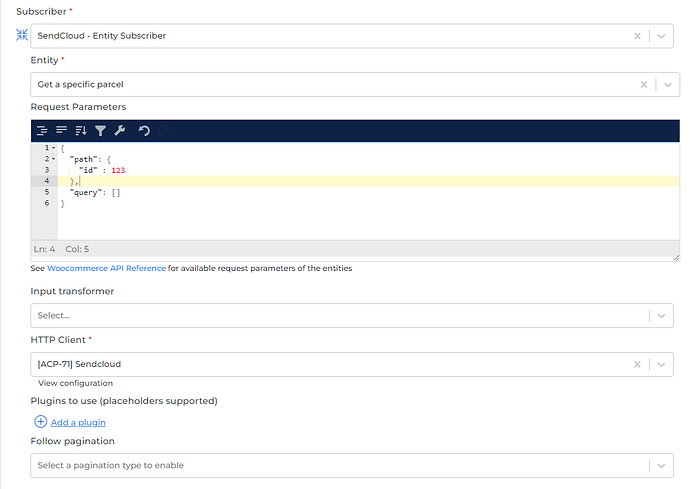
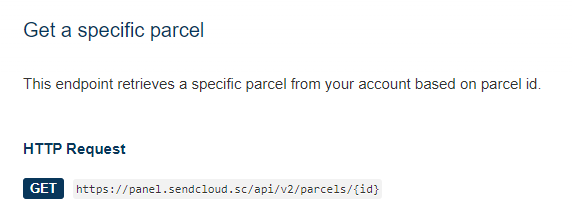
- Path is the path parameter of the url. For example the {id}.
- Query is defined set of parameters attached to the end of a url.
Example: www.url.com?type=true&start=0
3. Publishing Entity to Sendcloud
3.1 Steps- Go to Connections -> Outgoing, create a new outgoing configuration and select Sendcloud Publisher as the publisher.
- Select the Action that you want the publisher to perform with the data.
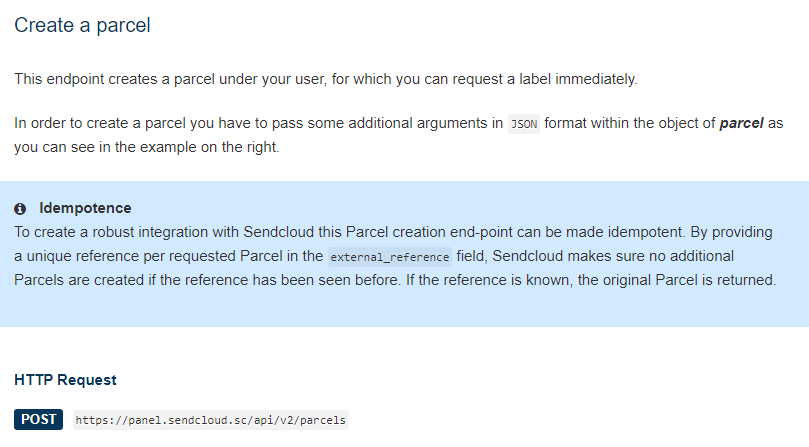
- Select the Sendcloud entity you want the data to be published to.
- You can optionally add any path data to the request on the key path.
- You can optionally add any query data to the request on the key query.
- You can optionally add any payload data to the request on the key payload.
- Select the HTTP Client to use.
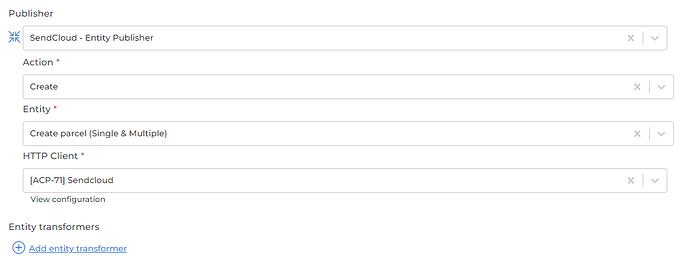
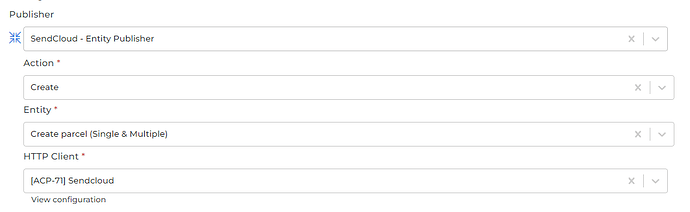
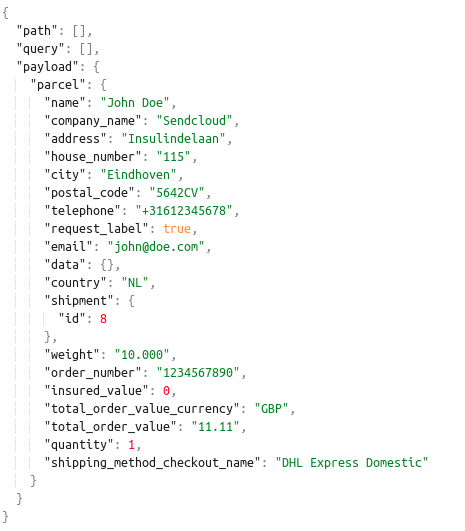
- Path is the path parameter of the url. For example the {id}.
- Query is defined set of parameters attached to the end of a url.
Example: www.url.com?type=true&start=0 - Payload is the data contained within a request.