
Overview
The Generic SOAP package provides pre-configured examples for building integrations with SOAP-based web services using Alumio. These examples show how Alumio can communicate with SOAP endpoints to retrieve data, send SOAP requests, and transform SOAP messages between systems. The package includes example configurations for Incoming Configuration, Outgoing Configuration, and Transformers, providing a complete foundation for building SOAP integrations. These templates can be used as a starting point and customized based on the SOAP service endpoint, request structure, response format, and integration requirements.General Information
The Generic SOAP package shows how Alumio components work together to integrate with SOAP web services. SOAP (Simple Object Access Protocol) is a protocol used for exchanging structured data between applications through XML-based messages. Alumio can connect with SOAP services to retrieve information, send data, and process SOAP messages using configurable components. The package includes the following components:- Generic SOAP Incoming Configuration: retrieves data from a SOAP web service by sending SOAP requests and processing the returned XML response
- Generic SOAP Outgoing Configuration: sends data to a SOAP web service by generating and submitting SOAP requests based on the required service structure
- Generic SOAP Transformer: transforms and prepares SOAP request or response data into the required format before it is processed or sent to another system
Package Contents
The following Generic SOAP examples are included in the package: 1. Generic SOAP Incoming ConfigurationShows how to retrieve data from a SOAP web service using an Incoming Configuration. The configuration handles sending SOAP requests and processing the returned response, allowing Alumio to import data from SOAP-based systems. Use cases:
- Retrieving records from SOAP APIs
- Synchronizing data from legacy enterprise systems
- Importing XML-based responses into Alumio for further processing
Shows how to send data to a SOAP web service using an Outgoing Configuration. The configuration prepares and sends SOAP requests to external systems, allowing processed data from Alumio to be published to SOAP-based applications. Use cases:
- Sending updated records to SOAP services
- Integrating with enterprise applications that require SOAP requests
- Exporting transformed data to external systems
Shows how to transform SOAP data before it is processed by an Incoming or Outgoing Configuration. The transformer can be used to modify XML-based SOAP messages, map fields, and prepare data structures required by the target system. Use cases:
- Mapping SOAP response fields
- Preparing SOAP request payloads
- Converting data formats between systems
Typical Use Cases
The Generic SOAP package can be used for various integration scenarios, including:- Connecting Alumio with legacy SOAP-based applications
- Synchronizing data between enterprise systems
- Importing data from SOAP web services
- Sending transactions or updates to SOAP endpoints
- Transforming XML-based SOAP messages between systems
Customization
These configurations are designed as reusable templates. After importing the package, you can customize:- SOAP endpoint URL
- Authentication settings
- SOAP request structure
- XML payload format
- Response mapping
- Transformer logic
- Route and scheduling settings
Integration Flow Example
A typical Generic SOAP integration flow works as follows:- Generic SOAP Incoming Configuration retrieves data from the SOAP service.
- Generic SOAP Transformer processes and transforms the retrieved data.
- Generic SOAP Outgoing Configuration sends the processed data to another SOAP service or target system.
- Route manages the data flow between these configurations.
Template Import
Follow these steps to import a template to Alumio:- Log in to your Alumio dashboard.
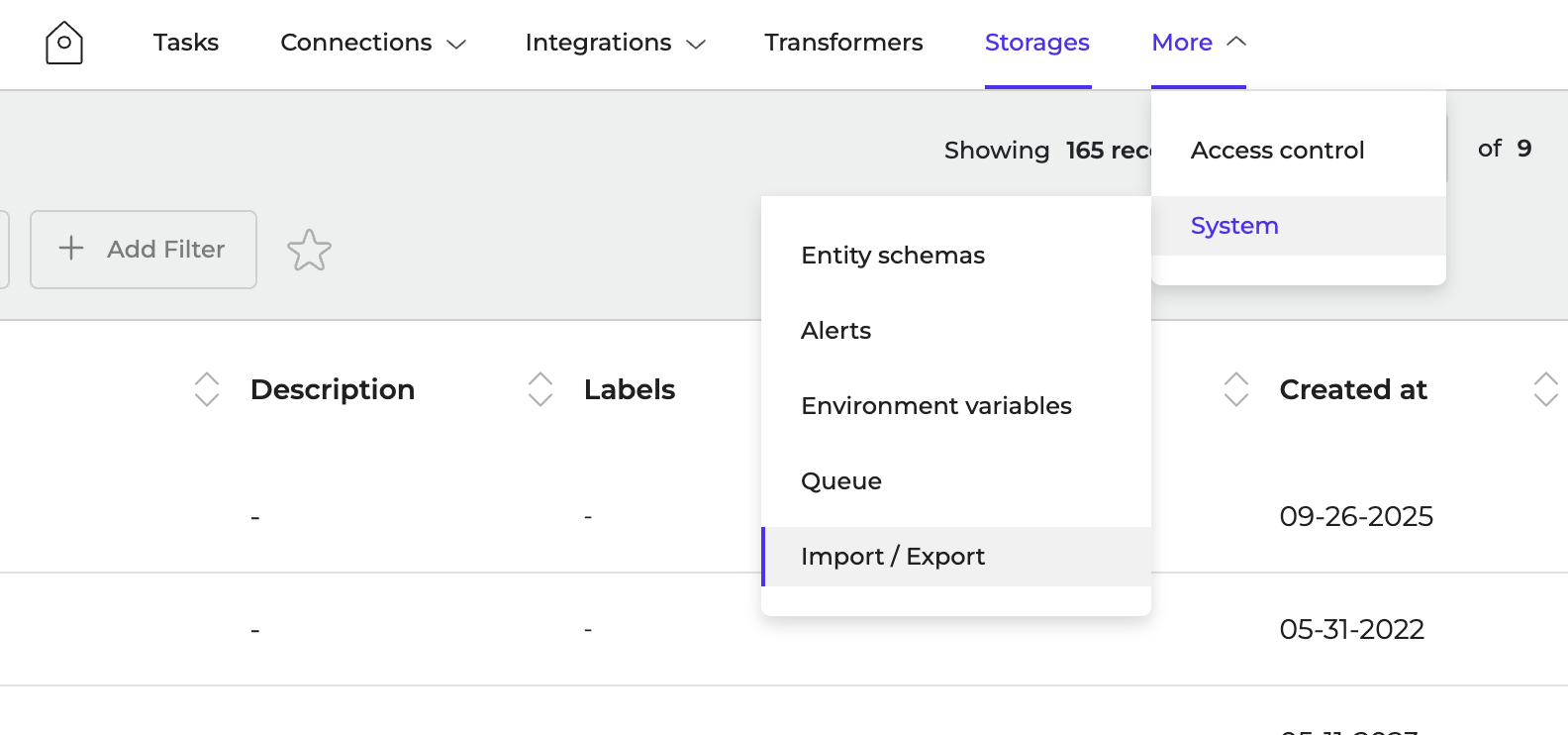
- Navigate to More > System > Import/Export
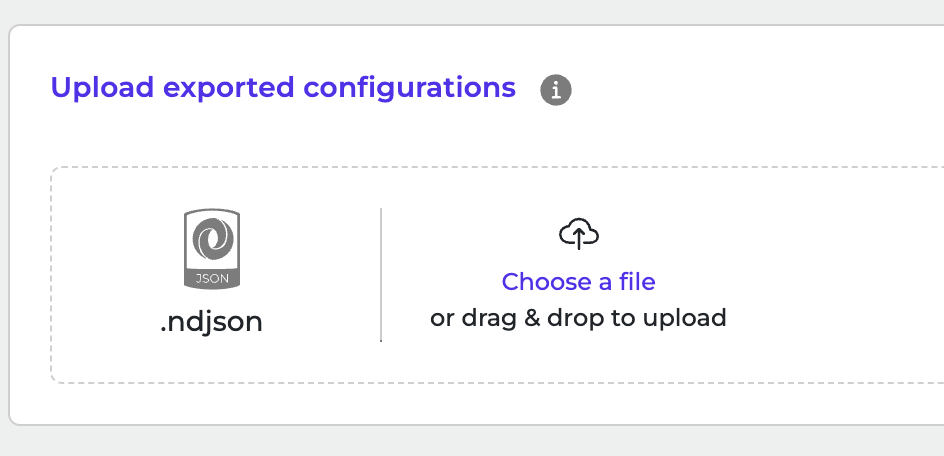
- Click to browse or drag and drop ndjson file to upload it.
- Click Import Configurations to start the import.